
Why cloud-free is better
Why you might not want to rely on the cloud for your Smart Home needs

In a previous post, I discussed at length some of the reasons why many of us default to cloud-based vendor solutions for our smart home ecosystems. If you missed that discussion you can find it here, but it mainly boils down to trading something for convenience. In some cases you’re trading money for convenience, in other cases you’re trading control and privacy for that convenience. This post will address the alternative to cloud-based solutions, namely cloud-free ones.
Why is it better?
I think it’s important to mention that this argument is intended to have some nuance to it. In other words, I am not one of those people who advocates “local good, cloud bad” reflexively, or out of some deep-seated ideological rejection of all things cloud. I use public cloud solutions in my job as a software engineer and it’s difficult to see how we as an enterprise would accomplish what we do without access to public cloud resources. What I am advocating instead is that there are features inherent to commercially-available, cloud-based, smart-home devices that I find incompatible with what I think is a more responsible way of building a smart home.
This begs the question, what is the “responsible” way of building and setting up a smart home? I think the short answer is to do so with a keen awareness of, and an uncompromising commitment to your values. What these are depends on you, and figuring the specifics out will involve some soul-searching so that you can understand your tolerance level when balancing security, control, and convenience. Some questions to ask yourself are, who do you want in charge of your smart home’s security, how much control do you want to retain, and how valuable is convenience to you. Asking these sorts of calibrating questions will give you a sense of where you sit on the spectrum.
I take the approach that ceding control over our smart home devices to a cloud-based vendor in the interest of convenience would require me to make some compromises I am unwilling to make, namely with regard to control, availability, cost, and security.
The good
You’re in the Driver’s Seat
When you self-host your smart home, you have complete control over every aspect of your system. This means that if there’s a feature you don’t like or one you feel is missing, you can simply remove or add it as needed. Your skill set, time, and ingenuity are pretty much the only limits to what you can achieve. Do you want a locally-hosted security system? You can design and build it to spec. Do you want to set your lights to all come on as soon as your car pulls up your driveway (presumably with you in it)? You can design and build that too. Do you desperately need your house to croon “Singing in the Rain” to you from every speaker in the house or apartment every time the weather forecast calls for rain? You can design and build that too.
With self-hosting, you’re not tied to a specific manufacturer or company’s software updates, which can be slow to roll out or even discontinued altogether. You have ultimate control over your data privacy, too. No more worrying about camera feeds being stored on servers thousands of miles away; with self-hosting, you decide who has access to that information, when, how much, and for how long.
Availability is Not a Concern
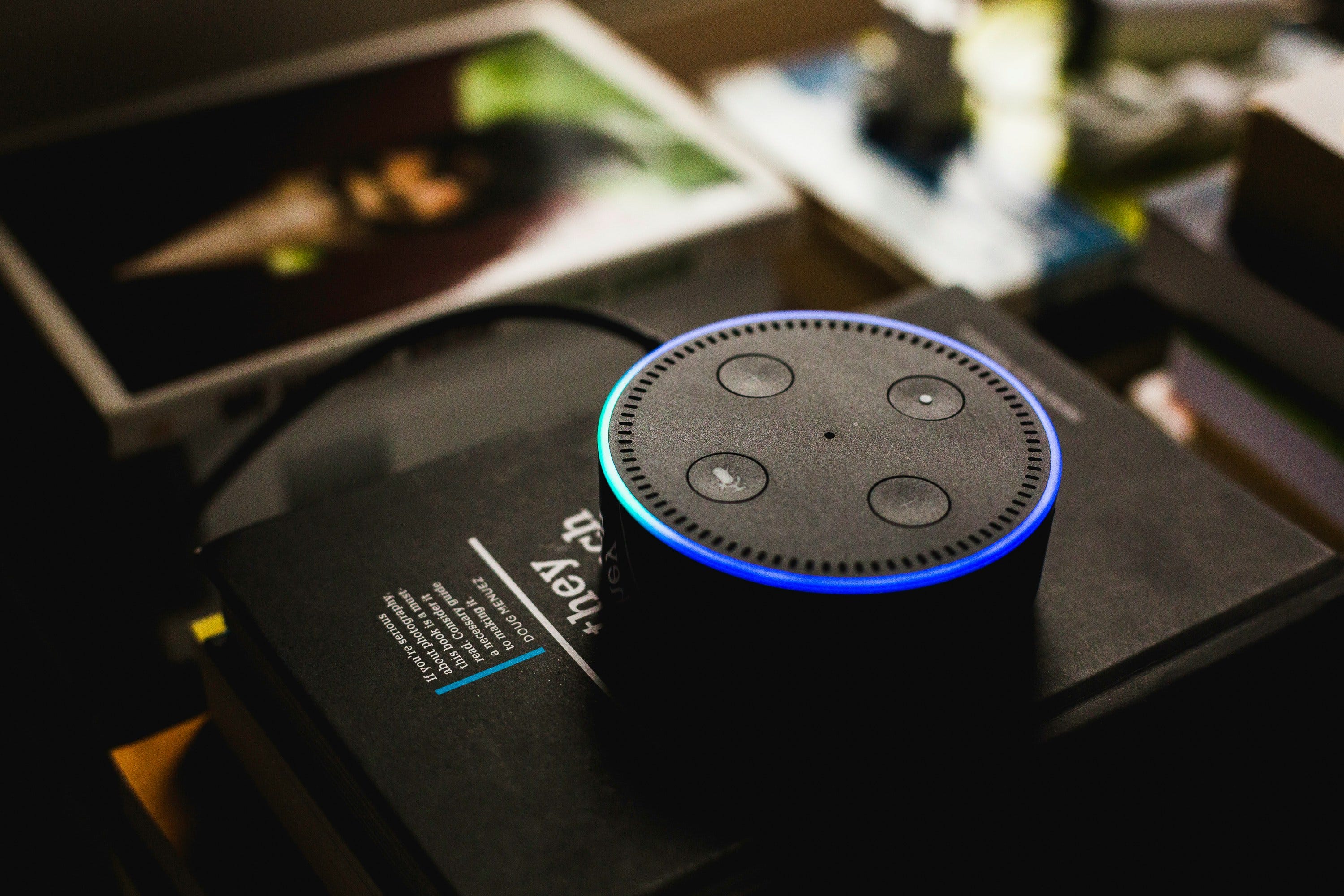
Imagine the Amazon Echo goes down for days, or hours even, due to an outage. If Amazon Echo is your primary interface with your smart home suddenly you are unable to make any requests to your devices. You might be locked out of your media, your security footage, your lights, maybe even your house or apartment! When you self-host you’re not dependent on the status or availability of your Echo devices. Did us-east-1 go down again? No problem! Your system remains up and running even if the internet connection drops. And what about company-wide outages? Worst of all, what if the company that supports your devices goes out of business, or decides running a cloud offering no longer fits their business plan? With self-hosting, you’re not relying on a third-party service to keep your home automation setup online so you become immune to any of these things.
You’re in Charge of Costs
One of the most significant benefits of self-hosting is that you have complete control over costs. You can tailor your budget and expenses to fit your needs and lifestyle. While some components might require an upfront investment, you know exactly what you’re paying for, which makes it easier to manage your finances. Cloud-based devices, particularly subscription-based ones, may give you the illusion of a predictable monthly outlay. In reality they can, and often do, change the terms at will. How many times have you invested in a device that within a few months of ownership locked most of their useful features behind a paywall, one that didn’t exist when you initially bought your device?
Scaling Up is a Breeze
If you need to add more devices or expand your system, self-hosting makes it relatively easy to scale up without incurring additional significant costs. Most of the components you’ll need are off-the-shelf and won’t break the bank. Particularly when it comes to items you might want multiple of, all you need is a single prototype you can duplicate. The “cost” at that point becomes scaling up your network if necessary, or your time either building the device again “n” number of times, or if purchasing a device, incorporating it into your existing network of smart devices.
Self-hosting your smart home offers numerous benefits, from control and customization to cost-effectiveness and scalability. Whether you’re looking for a simple solution or a comprehensive system, taking ownership of your home automation setup can bring peace of mind and satisfaction.
Naturally, this commitment to self-hosting your smart home is not all unicorns and rainbows. The fact is self-hosting has some very real costs, costs that need to be considered before embarking on this journey.
The costs
As the allure of self-hosting and DIY solutions grows, many of us are tempted to take on the challenge of hosting our own data, devices, and systems, probably for all of the reasons I outlined above. But before we dive headfirst into this world, it’s essential to consider the reality check that comes with self-hosting all the things.
Time is a Limited Resource
Self-hosting requires a significant investment of time, and I don’t just mean the initial setup. From designing the system to researching tools and software, acquiring new skills, and building out your infrastructure, the time commitment can be substantial. And let’s be honest – it’s often a never-ending process.
I’m still not finished with my self-hosted system, and I’ll probably never finish. The fact is, you will need to trade some of your precious time for self-ownership and control. This might mean sacrificing other activities or hobbies that bring you joy, so make sure you’re prepared to prioritize your DIY project.
Availability and Support
I think this is worth repeating: When you self-host your smart home, you have complete control over every aspect of your system. In other words, when you host your own systems and data, you become the ultimate responsible party for their availability. If your control center server goes down, your system will be unavailable – and that’s not a good feeling. You’ll need to take on support responsibilities too, which can mean dealing with family members’ frustrations when things break.
To mitigate these risks, always design redundancies into your system from the outset. This might include having “dumb” alternatives for smart systems (like always-available mechanical overrides), or designing your infrastructure to handle unexpected failures. I can’t tell you the number of times I’ve been so grateful for the old fashioned lamps and light switches when my fancy Zigbee network goes down and takes all my smart light bulbs and switches down with it.
The Spouse Approval Factor
This is an important and often overlooked aspect of DIY, locally-hosted smart home setups. Remember that not everyone in your household has the same level of comfort with technology, and they may not share your enthusiasm for self-hosted services and DIY projects. Remember to design your system with the least technical person in mind – if they hate it, you’ll likely feel their frustration too, and this can make any fun project no fun anymore! Build fail safes, backups, and analog alternatives to the fancy “smart” you’ll be putting into your home.
Take Your Time
Finally, take a deep breath and remember that self-hosting is a hobby – not a deadline-driven project. Ease your family and yourself into their new world gradually, allowing buy-in to happen organically. You don’t have to deploy your system fully-formed. Start with one item, one device, one service. This will help everyone in your household develop enthusiasm for your fledgling cloud-free smart home gradually. Ease them into the passion that you’ve probably spent months if not years cultivating.
Next Steps
I think it is important for me to recognize that for some, maybe for many, some of the challenges I have just outlined simply do not outweigh the benefits of designing, building, and hosting your own smart home. My aim with this article was to demonstrate some of the ways in which going cloud-free can benefit someone who is tired of ceding control over their smart devices to the cloud. It’s why I titled it “Why cloud-free is better” (emphasis on “better”).
My hope is that by understanding these realities, you can make an informed decision about whether self-hosting all the things is right for you and your household. Take it one step at a time, prioritize your resources, and design your system with redundancy, practicality, and spouse approval in mind, and above all, remember that this is supposed to be fun. Happy DIY-ing!